Showing posts with label nature. Show all posts

Great White Egret, Florida


This great white egret had been standing still for what seemed like an eternity before it finally plunged at its prey. The next couple of frames show it with its trophy bait fish. Shot at J. N. "Ding" Darling NWR, Sanibel Island, Florida.

via: national geographic

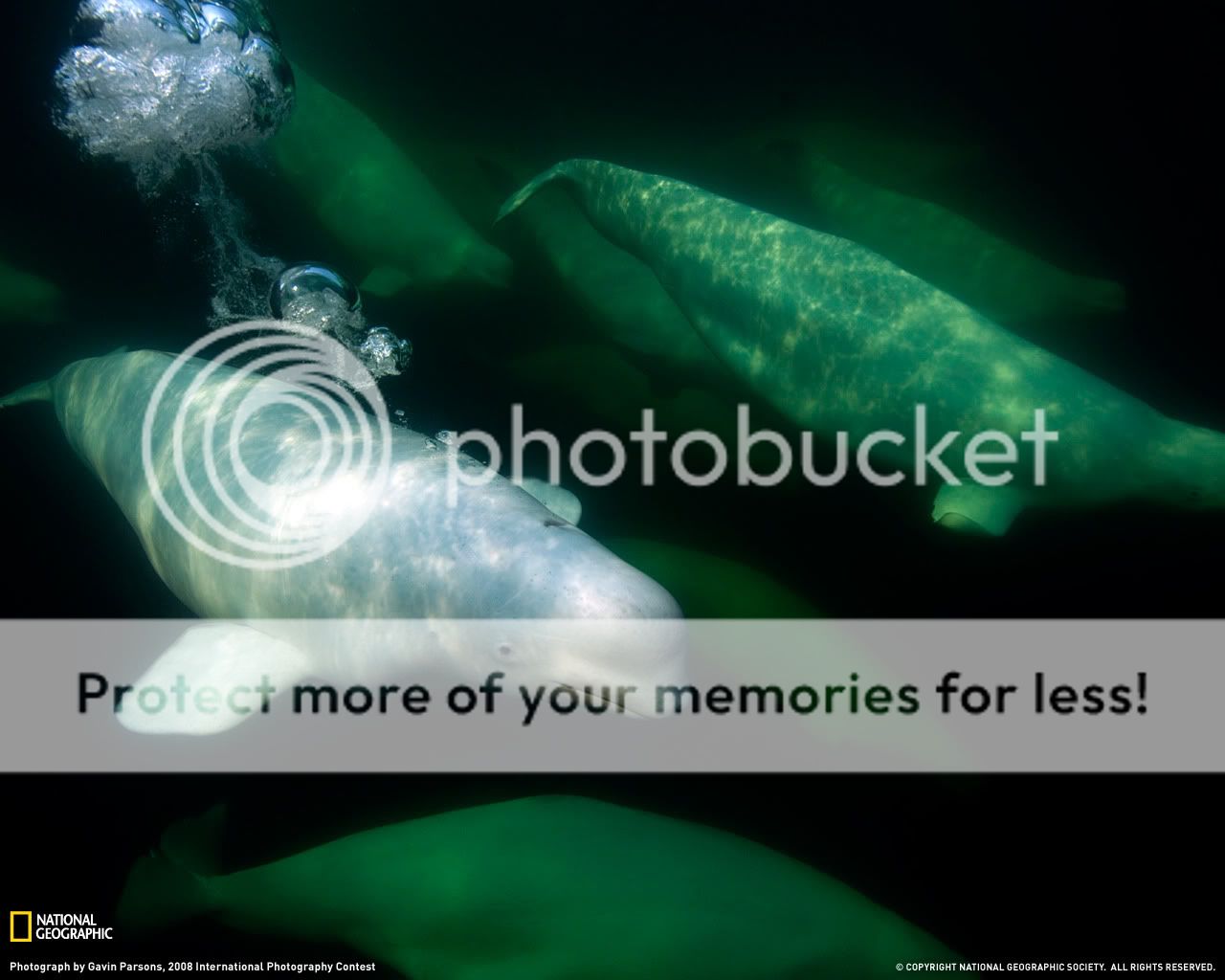
Beluga Whales, Canada


A pod of beluga whales diving to feed in Hudson Bay, Manitoba, Canada. The whale nearest to the photographer is releasing air to aid its descent.

via: national geographic

smoky trees


On a recent trip to a small town on the Brazilian/Bolivian border, I found this man tending a burning field of debris and vegetation. Something as mundane as this may seem like a daily, necessary chore to one man, while offering a symbolic portrait of tranquil repose to another.

Sarychev Volcano


A fortuitous orbit of the International Space Station allowed the astronauts this striking view of Sarychev volcano (Russia’s Kuril Islands, northeast of Japan) in an early stage of eruption on June 12, 2009. Sarychev Peak is one of the most active volcanoes in the Kuril Island chain and is located on the northwestern end of Matua Island.

Prior to June 12, the last explosive eruption had occurred in 1989 with eruptions in 1986, 1976, 1954 and 1946 also producing lava flows. Commercial airline flights were diverted from the region to minimize the danger of engine failures from ash intake. This detailed photograph is exciting to volcanologists because it captures several phenomena that occur during the earliest stages of an explosive volcanic eruption.

The main column is one of a series of plumes that rose above Matua Island (48.1 degrees north latitude and 153.2 degrees east longitude) on June 12. The plume appears to be a combination of brown ash and white steam. The vigorously rising plume gives the steam a bubble-like appearance; the surrounding atmosphere has been shoved up by the shock wave of the eruption. The smooth white cloud on top may be water condensation that resulted from rapid rising and cooling of the air mass above the ash column, and is probably a transient feature (the eruption plume is starting to punch through). The structure also indicates that little to no shearing winds were present at the time to disrupt the plume. By contrast, a cloud of denser, gray ash -- most probably a pyroclastic flow -- appears to be hugging the ground, descending from the volcano summit. The rising eruption plume casts a shadow to the northwest of the island (bottom center). Brown ash at a lower altitude of the atmosphere spreads out above the ground at upper right. Low-level stratus clouds approach Matua Island from the east, wrapping around the lower slopes of the volcano. Only about 1.5 kilometers of the coastline of Matua Island (upper center) can be seen beneath the clouds and ash.

via: NASA

Aurora Borealis, Manitoba Canada


The Aurora Borealis as seen from the sub-arctic tundra nightscape. Wapusk National Park, Manitoba, Canada.

via: national geographic

Greenland by Air


This photo of the Sondrestrom Glacier in Greenland was taken from a window on NASA's Gulfstream III environmental research aircraft as it flew along the Fjord outside of Kangerlussuaq on June 4. The synthetic aperture radar mounted on the aircraft's belly had just completed the repeat pass of southeast Greenland and was on its way back to Thule Air Base during the Arctic Ice Radar Mission.

by: Roger Chao
via: NASA

Living Furniture


Unlike many of the “tree chairs” that have been surfacing lately, the Garden Chair forgoes introducing any man made materials, and remains a completely organic, living piece, meaning no excess, no waste and more oxygen! The unique design also creates a lasting relationship between the user and the object. Each chair has been pre-designed and cared for with the utmost attention – grown, tended to, twisted and formed over the course of 7-8 years – but able to continually change and evolve with or without the same diligence.


The idea first came about over 20 years ago when Peter “Pook” Cook, a free-spirited entrepreneur living in the mountains of Australia, wondered if it would be possible to grow his own chairs. Unaware of anyone else practicing tree shaping in the world, Pook toyed with this idea for years, conducting numerous experiments with various gardening methods and tree types while recording his observations. Eventually, in 1996 his experiments and collaboration with his partner Becky Northey led to the development of a system of tree shaping he dubbed “Pooktre.”

Today Pooktre grows 5 pieces a year ranging from coffee tables, bed-ends, candelabras and even quirky “Living People Trees”. They also offer their help to others who want to grow their own furniture, and happily invite collaborators who are interested in growing commissioned pieces. Pooktre’s designs are unquestionably a unique expression and recall a natural beauty that can often be overshadowed by the sheen modern design.


via: inhabitat